Your Car's Coolant Doesn't Just Stop Working at 100,000 Miles — Here's What Actually Breaks It Down
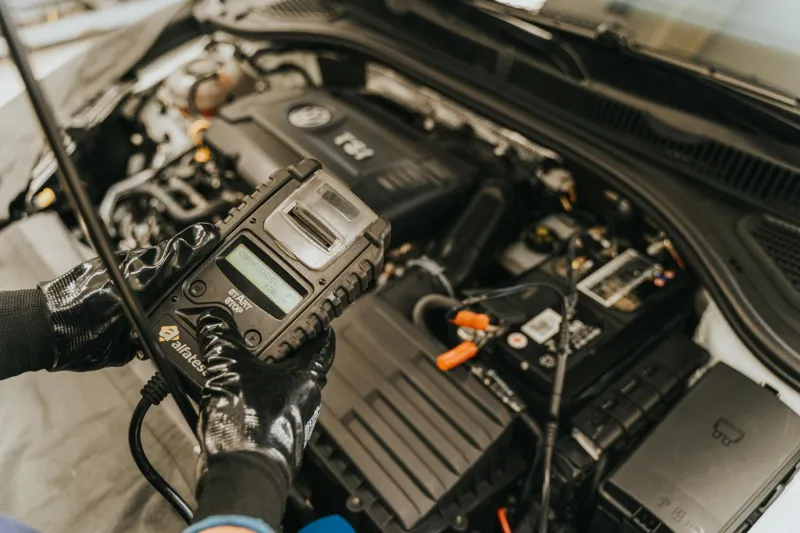
Walk into any auto parts store and ask about coolant service, and you'll hear the same advice: "Flush it every 100,000 miles, maybe 150,000 if you're pushing it." Most drivers accept this as gospel, dutifully scheduling their coolant service based on the odometer reading. But here's what the service manuals don't tell you: your coolant doesn't wear out because you've driven a certain number of miles.
The Mileage Myth That's Costing You Money
The idea that coolant expires at a specific mileage comes from manufacturers trying to create simple maintenance schedules. It's easier to tell customers "replace at 100K" than to explain the complex chemistry happening inside your cooling system. But this oversimplification leads to unnecessary services for some drivers and catastrophic failures for others.
Your coolant isn't like motor oil, gradually breaking down with each mile traveled. Instead, it's a chemical cocktail that maintains its protective properties until specific conditions cause it to fail. Understanding these conditions can save you hundreds in premature flushes or thousands in engine damage.
What Actually Kills Your Coolant
Heat Cycling Is the Real Enemy
Every time your engine heats up and cools down, your coolant expands and contracts. This constant thermal stress breaks down the chemical additives that prevent corrosion and maintain pH balance. A delivery truck making 50 stops a day experiences far more heat cycles than a highway commuter covering the same annual mileage.
This explains why city drivers often need coolant service sooner than highway drivers, even with lower odometer readings. The stop-and-go traffic creates more heating and cooling cycles, accelerating chemical breakdown.
pH Changes Signal Real Problems
Fresh coolant maintains a slightly alkaline pH around 8.5-9.5. As the chemical additives deplete, pH drops toward acidic levels. Once pH falls below 7.0, your coolant becomes corrosive, eating away at gaskets, water pump seals, and metal components.
This pH shift can happen at 40,000 miles in harsh conditions or remain stable past 200,000 miles in ideal circumstances. The only way to know is testing, not guessing based on mileage.
Contamination Accelerates Everything
Small leaks introduce air into the system, oxidizing the coolant and accelerating chemical breakdown. A failing radiator cap that doesn't maintain proper pressure allows contamination that can ruin coolant in months, regardless of mileage.
Similarly, mixing different coolant types creates chemical reactions that neutralize protective additives. That "emergency" top-off with whatever antifreeze was available might have started a countdown timer that has nothing to do with how many miles you drive.
Why the 100,000-Mile Rule Persists
Manufacturers choose round numbers because they're easy to remember and market. "Change coolant every 100,000 miles" fits nicely in owner's manuals and service schedules. It's also conservative enough to prevent most failures while generating steady service revenue.
Service centers perpetuate this myth because it's profitable and simple. Testing coolant pH and additive levels requires equipment and training. Scheduling based on mileage requires only looking at the odometer.
What You Should Actually Test For
Visual Inspection Tells You More Than Mileage
Healthy coolant should be clear and brightly colored. Rusty, brown, or muddy coolant indicates corrosion and contamination, regardless of mileage. Floating particles or oil contamination mean immediate attention is needed.
pH Testing Reveals Chemical Health
Inexpensive pH test strips designed for coolant can tell you more about your system's condition than any mileage-based schedule. If pH remains above 8.0, your coolant is likely still protecting your engine.
Freeze Protection Isn't the Whole Story
Many drivers test only freeze protection, but antifreeze concentration doesn't indicate additive depletion. Your coolant might still protect against freezing while failing to prevent corrosion.
When Mileage Actually Matters
Mileage-based schedules make sense in one scenario: when you can't or won't test coolant condition. For drivers who never check fluid levels or perform basic maintenance, following manufacturer intervals prevents most cooling system failures.
But for engaged car owners willing to spend five minutes annually testing coolant condition, mileage becomes irrelevant. Your cooling system will tell you when service is needed through visual cues and chemical testing.
The Real Cost of Blind Scheduling
Following mileage-based coolant schedules costs money in two ways. Premature flushes waste hundreds on unnecessary services. More importantly, waiting until the "scheduled" interval while ignoring warning signs can destroy engines worth thousands.
A $15 pH test strip might reveal that your 80,000-mile coolant needs immediate replacement, preventing a $3,000 engine rebuild. Conversely, that same test might show your 120,000-mile coolant is perfectly healthy, saving an unnecessary $200 service.
The Bottom Line
Your car's coolant doesn't check the odometer before deciding to fail. Heat cycles, chemical contamination, and pH changes determine when cooling system protection ends. Understanding these real factors helps you maintain your car based on actual need rather than arbitrary numbers.
Next time someone tells you coolant expires at 100,000 miles, remember: chemistry doesn't care about mileage. Your cooling system's health depends on conditions, not miles traveled.