Why Washing Your Car in the Sun Creates Water Spots—and Why That's Not Even the Real Problem
The Universal Car Washing Rule
Ask any car enthusiast about washing technique, and they'll immediately tell you: never wash your car in direct sunlight. This advice gets repeated so often it's become automotive gospel, usually accompanied by warnings about unsightly water spots that supposedly result from washing in sunny conditions.
But like many automotive rules that get passed down without explanation, this one only tells half the story. Understanding why sunlight creates water spots reveals a much more significant problem that affects your car's paint whether the sun is shining or not.
The Chemistry of Water Spots
Water spots aren't actually caused by water itself—they're caused by what's dissolved in the water. When water evaporates from your car's surface, it leaves behind mineral deposits, primarily calcium and magnesium compounds that were invisible while suspended in solution.
Direct sunlight accelerates this evaporation process, causing water to disappear faster than you can rinse it off. The result is concentrated mineral deposits that etch into your clear coat, creating the cloudy, white spots that make your paint look perpetually dirty.
But here's what most people don't realize: those same minerals are present whether you wash in blazing sunshine or complete shade. The sun just makes the problem more immediately visible.
The Hard Water Reality
The real villain in water spot formation isn't sunshine—it's hard water. Most municipal water supplies contain dissolved minerals picked up as water travels through limestone, chalk, or gypsum deposits underground. The harder your water, the more minerals get left behind when it evaporates.
In many parts of the United States, tap water contains 150-300 parts per million of dissolved minerals. When you spray this water on your car and let it dry, you're essentially painting your vehicle with a thin layer of rock dust, whether you're washing at noon or midnight.
This explains why some car owners who religiously follow the "no sun" rule still end up with water spots, while others seem to get away with washing anytime without issues. The difference usually comes down to local water quality, not washing technique.
The Evaporation Speed Trap
Sunlight creates an evaporation speed trap that makes mineral deposits more concentrated and harder to remove. When water evaporates quickly, minerals don't have time to spread out—they get deposited in concentrated patches that bond more aggressively with your paint.
Slow evaporation, like what happens in shade or cooler temperatures, allows minerals to spread more evenly and gives you more time to rinse them away before they become problematic. But slow evaporation doesn't eliminate the minerals—it just gives you a better chance of managing them.
The Soap and Rinse Cycle Problem
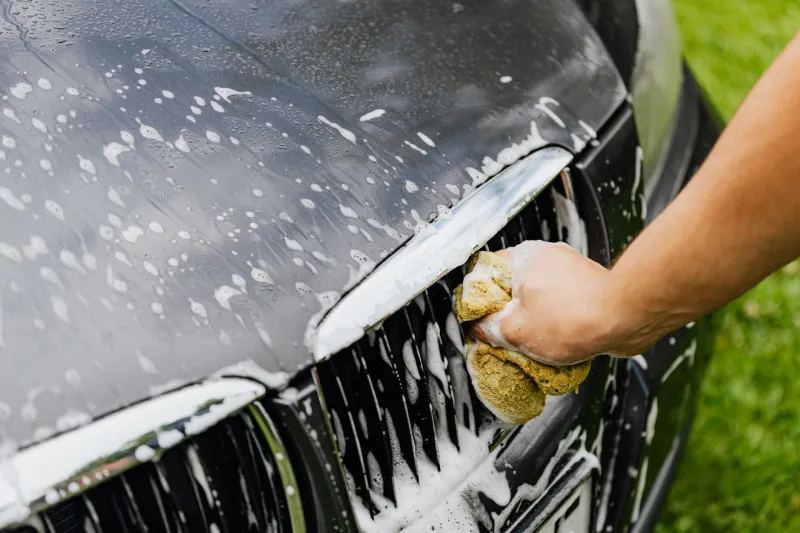
Most car washing routines unknowingly compound the mineral deposit problem through poor rinse timing. The typical approach involves soaping the entire car, then rinsing everything off at once. During the soap phase, mineral-laden water sits on your paint, begins evaporating, and starts concentrating minerals even in shaded conditions.
By the time you get to rinsing, you're not just removing soap—you're trying to dissolve mineral deposits that have already begun forming. If your rinse water is also hard, you're adding new minerals while attempting to remove existing ones.
Temperature's Hidden Role
Hot surfaces accelerate water evaporation regardless of sun exposure. A car that's been sitting in a garage on a warm day can cause rapid evaporation that rivals direct sunlight. Engine heat, exhaust heat, and even heat absorbed by dark paint colors can create localized evaporation zones that concentrate minerals.
This is why professional detailers often work on cool cars in cool conditions, even when washing indoors. It's not just about avoiding sun—it's about controlling evaporation rates to manage mineral deposition.
The Distilled Water Solution
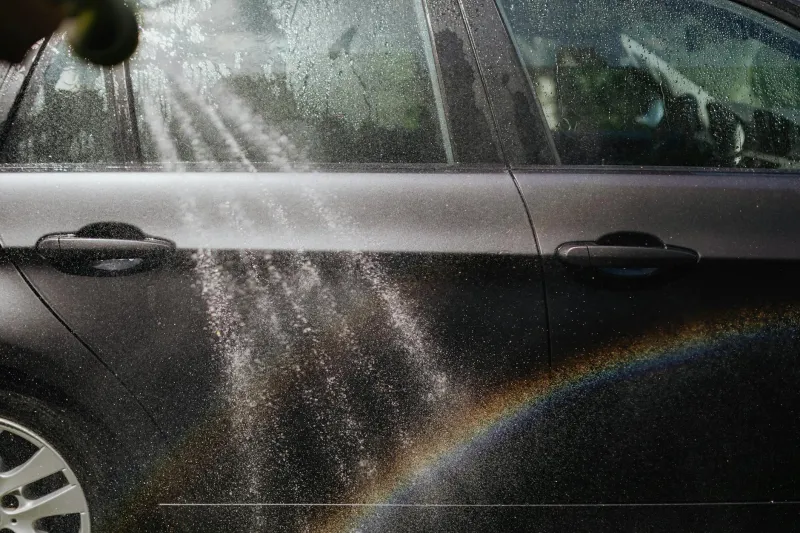
Professional car washes and high-end detail shops often use deionized or distilled water for final rinses, especially in areas with hard water. This water has had minerals removed, so when it evaporates, it leaves nothing behind.
For home washing, using distilled water for your final rinse can eliminate water spots regardless of sunshine or shade. A gallon of distilled water costs about $1 at most grocery stores and can make the difference between spotted and spot-free paint.
Rethinking the Washing Process
The real solution to water spots isn't avoiding sunshine—it's managing evaporation and mineral content throughout your washing process. This means working in sections, rinsing frequently, and understanding that your local water quality determines your spot risk more than the weather.
Some car owners in areas with extremely hard water find that washing in direct sun with proper technique (frequent rinsing, working in small sections) produces better results than washing in shade with poor water management.
The Bigger Picture
The "don't wash in the sun" rule persists because it's simple and partially effective. But it addresses the symptom rather than the cause. Understanding the actual chemistry behind water spots reveals why some people can break this rule successfully while others struggle with spots no matter when they wash.
Your local water quality, washing technique, and evaporation management matter more than the position of the sun. The next time you wash your car, pay attention to how quickly water evaporates from different surfaces and adjust your process accordingly. Your paint will thank you whether you're working in blazing sunshine or deep shade.