Washing Your Car More Often Might Actually Be Hurting the Paint
For as long as most of us can remember, washing the car regularly has been presented as basic responsible ownership. Keep it clean, keep it protected, keep it looking new. It sounds straightforward. It sounds like obvious, harmless advice.
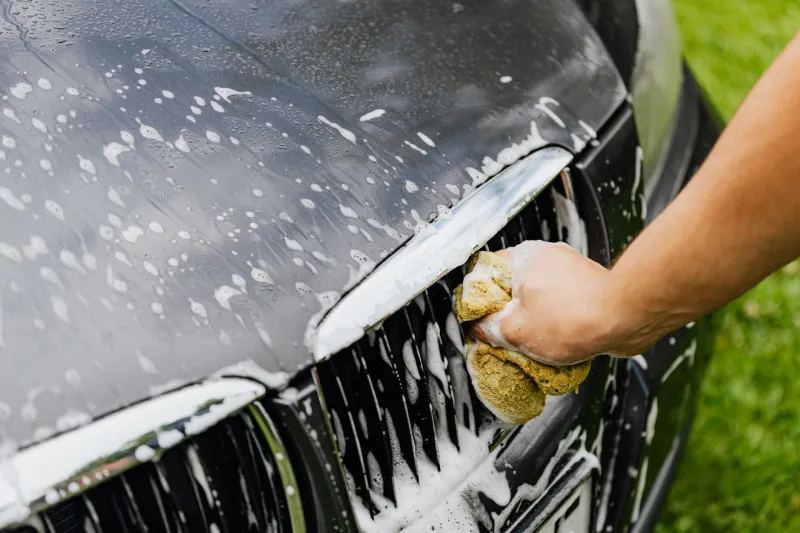
But here's what that advice leaves out: every time you wash your car, you are introducing the potential for surface damage. The friction involved in removing dirt — whether it's an automatic car wash brush, a sponge, or even a microfiber mitt — drags particles across the clear coat. Do that often enough, with the wrong materials or the wrong technique, and you end up with a finish covered in microscopic scratches and swirl marks that scatter light and make the paint look permanently dull.
More washing doesn't automatically mean better paint. In many cases, it means the opposite.
What's Actually Happening at the Surface Level
Modern automotive paint is built in layers. The color you see is covered by a clear coat — a transparent protective layer that gives paint its depth and gloss. That clear coat is harder than the color layer beneath it, but it's still vulnerable to abrasion.
When dirt sits on the surface of a car, it's not just grime. It's a mixture of fine particles — road dust, brake dust, industrial fallout, pollen — many of which are abrasive at a microscopic level. When you wash the car, those particles get moved across the clear coat by whatever you're using to clean with. If the wash media isn't lubricated enough, or if it's been contaminated with particles from a previous pass, those tiny abrasives scratch the surface.
Individually, each scratch is invisible to the naked eye. Collectively, after dozens of washes, they accumulate into what detailers call 'wash-induced marring' — a web of fine swirl marks that become most visible in direct sunlight or under artificial light at an angle. This is why cars that have been washed frequently but without careful technique often look worse than cars that have been washed less often and handled more thoughtfully.
The Automatic Car Wash Problem
Automatic car washes are convenient, and most people use them without a second thought. But the tunnel-style washes with spinning brushes are particularly rough on paint. Those brushes contact thousands of cars per day and collect debris from each one. By the time they reach your vehicle, they're carrying abrasive contamination from every car that went through before yours.
Even 'touchless' automatic washes — the kind that use high-pressure water jets and strong chemical detergents instead of physical contact — carry their own risks. The chemicals needed to clean effectively without physical contact are often aggressive enough to degrade wax protection and, over time, affect the clear coat itself.
Neither type is inherently catastrophic for a single visit. But regular use of automatic washes, especially brush-based ones, adds up in ways that become visible on the paint over time.
The Frequency Myth
The idea that frequent washing is inherently good for paint probably traces back to a real truth: leaving contaminants on your paint for extended periods causes damage. Bird droppings, tree sap, road tar, and industrial fallout can etch into the clear coat if left untreated. The logical conclusion people drew from that fact was that more washing equals more protection.
The problem is that the logic jumps over the part where the washing itself introduces risk. It's not that washing is bad — it's that unnecessary washing, done with imperfect technique, adds wear without a corresponding protective benefit.
Car care product manufacturers have also had little incentive to complicate this message. Selling more car wash soap, more quick-detail spray, more drying towels — all of that benefits from a culture that treats frequent washing as virtuous. The 'wash it every week' norm is good for business, even if it's not always good for your paint.
What a Paint-Safe Washing Routine Actually Looks Like
None of this means you should stop washing your car. Contamination left on paint does cause real damage. The goal is to wash effectively and carefully — not constantly.
A few principles that actually protect paint over the long run:
Wash when the car needs it, not on a schedule. If the car doesn't have visible dirt, bird droppings, or road contamination, it doesn't need a full wash. Washing a relatively clean car just for the sake of routine introduces friction risk without a cleaning benefit.
Use the two-bucket method for hand washing. One bucket holds your soapy wash water, the other holds clean rinse water. After each pass with your wash mitt, rinse it in the clean bucket before reloading with soap. This keeps contaminated particles from being dragged back across the paint.
Use a quality microfiber wash mitt and a pH-neutral car wash soap. Avoid dish soap — it strips wax and can be harsh on clear coat over time. Microfiber is significantly gentler than traditional sponges, which can trap dirt against the paint surface.
Rinse the car thoroughly before touching it. A pre-rinse removes the loose surface contamination that would otherwise be dragged across the paint by your wash mitt. This single step dramatically reduces scratch risk.
Dry with a clean, soft microfiber drying towel. Air drying leaves water spots. Dragging a rough or contaminated towel across the paint after washing undoes the careful work you just did.
Consider a spray detailer or waterless wash for light dust. For cars that aren't genuinely dirty — just dusty from sitting — a quality spray detailer applied with a clean microfiber cloth is far less abrasive than a full wash.
The Takeaway
The instinct to keep your car clean is correct. The assumption that more frequent washing automatically means better-protected paint is where things go sideways. Washing is a mechanical process that carries real risk to the clear coat every time it happens — and doing it often with imperfect technique is one of the most common ways paint loses its depth and gloss over years of ownership. A less frequent, more deliberate approach almost always produces better long-term results than a weekly scrub-down at the drive-through wash.