The Low-Mileage Used Car Trap: Why That Odometer Number Is Telling You the Wrong Story
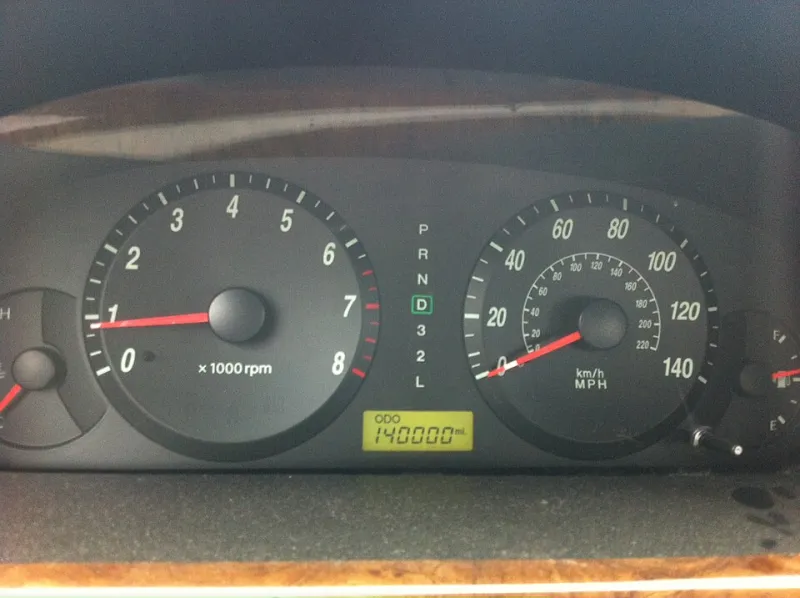
Photo: ParentingPatch, CC BY-SA 3.0, via Wikimedia Commons
Walk into any used car conversation in America and you'll hear some version of the same logic: lower miles equals less wear equals better car. It's practically instinct at this point. Buyers will pay a significant premium for a three-year-old car with 28,000 miles over an identical model with 55,000 — without asking a single question about how either vehicle was actually driven.
That instinct is understandable. It's also frequently wrong in ways that cost buyers real money.
The odometer tells you how far a car traveled. It tells you nothing about how hard the journey was. And those are two very different things.
Why a Mile Is Not a Mile
The mechanical stress your car experiences during a mile of stop-and-go city driving is fundamentally different from what it experiences during a mile on an open highway.
On the highway, your engine reaches operating temperature and holds it. It settles into a consistent RPM range. The transmission locks into a high gear and stays there. The brakes are used occasionally, lightly. The cooling system operates efficiently. Every major mechanical system is doing exactly what it was designed to do — working steadily within its optimal range.
In city driving, none of that is true. The engine cycles between cold starts and operating temperature repeatedly throughout the day. It revs up and lugs down constantly. The transmission shifts through its full range hundreds of times per commute. The brakes are applied hard and frequently. The cooling system works harder to manage heat generated by repeated acceleration. Every one of those cycles adds wear that the odometer never records.
A car driven 15,000 miles per year on suburban highways has experienced far fewer of those stress cycles than a car driven 7,000 miles per year in dense urban traffic. By the time you're looking at them on a used car lot, the highway car may genuinely have less mechanical wear — despite showing more than double the mileage.
The Components That Tell the Real Story
If the odometer can mislead you, what actually reveals a car's true condition? Several specific components carry the evidence that driving style leaves behind.
Brake rotors and pads. This is one of the most reliable indicators. City-driven cars eat brakes. If a 40,000-mile car needs new brake pads or shows heavily grooved rotors, that's a clear signal about how those miles were accumulated. A 90,000-mile highway car may still have significant pad life remaining. Ask to see the brakes, or have an independent mechanic check them before purchase.
Transmission condition. Automatic transmissions wear proportionally to how often they shift, not how far they travel. A city-driven car with 50,000 miles has put its transmission through more shift cycles than a highway car with 80,000. Transmission fluid that's dark, burnt-smelling, or full of fine metallic particles is telling you something the odometer never will. This is one of the most important checks to request during a pre-purchase inspection.
Engine mounts and motor mounts. Frequent stop-and-go acceleration puts repeated torque stress on engine and transmission mounts — the rubber components that hold the drivetrain in place. City-driven cars often show premature mount wear that causes vibration and drivetrain movement. It's a repair that can run several hundred dollars and is a direct reflection of how a car was used.
Clutch condition (manual transmissions). If you're considering a manual transmission vehicle, the clutch is an immediate tell. City driving requires constant clutch engagement and disengagement in traffic. A 45,000-mile city car may need a clutch replacement that a 90,000-mile highway car hasn't approached yet.
Coolant system wear. Repeated heating and cooling cycles — the kind generated by urban stop-and-go driving — degrade coolant, hoses, and the water pump faster than steady highway operation. A city-driven car may show early signs of coolant breakdown or hose softening well below the mileage at which those components would typically be replaced.
The Short-Trip Problem That Makes Low Mileage Actively Dangerous
There's a specific scenario that makes low-mileage cars particularly risky: the car that was only ever driven short distances.
Every time you start a cold engine, it takes several miles to fully reach operating temperature. Oil circulates fully, seals expand properly, and combustion efficiency normalizes. A car that was driven exclusively in short trips — a few miles to the grocery store, a few miles to work — may have spent the majority of its operating life running partially cold.
Cold engine operation causes moisture and fuel vapor to accumulate in the oil before it burns off. Over time, this creates sludge. It accelerates wear on cylinder walls and piston rings. It stresses the catalytic converter, which needs operating temperature to function correctly.
A car with 30,000 miles accumulated entirely in five-minute trips may have more internal engine wear than a car with 100,000 miles of regular highway driving. And unless you pull the oil cap and look for sludge buildup — or have a mechanic do a compression test — you won't see it coming.
How to Actually Evaluate a Used Car
The goal isn't to ignore mileage — it's to put it in context. Here's what actually matters:
- Where was the car registered? Rural registration suggests more highway driving. Dense urban zip codes suggest city use. This isn't definitive, but it's a useful starting point.
- What does the service history show? Frequent oil changes on a low-mileage car that was driven short trips may actually indicate an owner who understood the problem and compensated for it.
- What does a pre-purchase inspection reveal? Brake wear, transmission fluid condition, and engine compression tell a more honest story than the number on the dashboard.
- How does it drive? Vibration, rough shifting, and hesitation under acceleration are things a test drive reveals that a listing never will.
The Takeaway
The odometer is a starting point, not a conclusion. A car's mechanical health is determined by how it was driven, not just how far. Before paying a premium for low mileage, ask the questions that the number on the dashboard can't answer — because the real story is usually written somewhere else entirely.