Your Transmission Fluid Might Last 100,000 Miles — Despite What That Service Center Told You
Your Transmission Fluid Might Last 100,000 Miles — Despite What That Service Center Told You
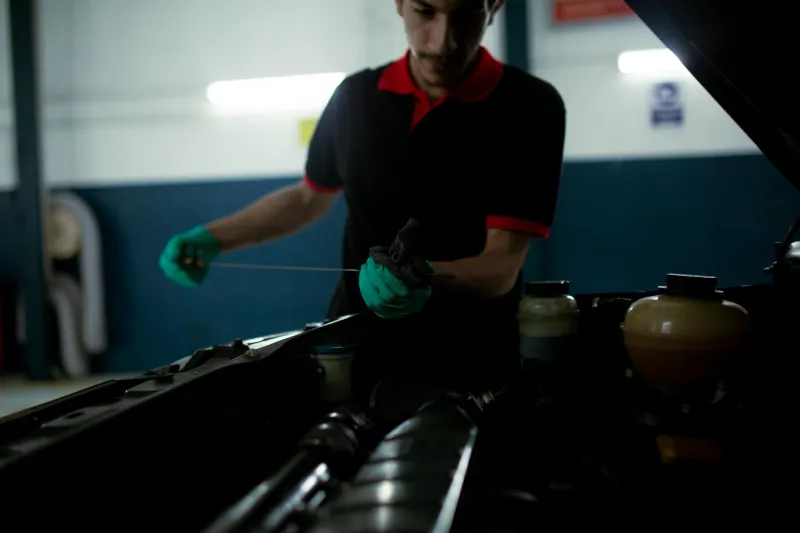
Walk into any quick-lube shop or chain service center, and you'll hear the same pitch: your transmission needs a flush every 30,000 miles, maybe 50,000 if you're lucky. The technician will show you a dipstick with dark fluid, shake their head gravely, and quote you somewhere between $150 and $300 for a "complete transmission flush." It's become as routine as oil changes — and just as misunderstood.
Here's what they're not telling you: most modern vehicles have transmission fluid designed to last far longer than these service intervals suggest. In many cases, you might not need any transmission service for 100,000 miles or more.
The Common Belief vs. Reality
The automotive service industry has convinced millions of drivers that transmission fluid breaks down quickly and needs frequent replacement. This belief is so widespread that many car owners budget for regular transmission flushes without ever checking what their vehicle actually requires.
But flip through your owner's manual — the actual document written by the people who built your car — and you'll often find a very different story. Many modern vehicles list transmission fluid as "lifetime" or recommend service intervals of 80,000 to 120,000 miles under normal driving conditions.
Take a 2020 Honda Accord, for example. Honda's official maintenance schedule calls for transmission fluid replacement at 100,000 miles. Compare that to the 30,000-mile intervals pushed by many service centers, and you're looking at potentially unnecessary services costing hundreds of dollars each.
Why Service Centers Push Frequent Flushes
The math here isn't complicated. A transmission flush is a high-profit service that requires minimal labor and expertise. Unlike complex repairs that demand skilled technicians, a flush can be performed quickly using automated equipment. The markup on transmission fluid is substantial, and the service can be completed in under an hour.
Service centers also exploit genuine anxiety about transmission problems. Everyone knows that transmission replacement can cost thousands of dollars, so preventive maintenance sounds like smart insurance. When a technician suggests that dark fluid means trouble, most drivers would rather pay for a flush than risk catastrophic failure.
There's also the "severe driving conditions" loophole. Service centers often classify nearly all driving as "severe" — city traffic, short trips, hot weather, cold weather, hills, highway driving. By this definition, almost every vehicle qualifies for more frequent service intervals.
The Difference Between a Flush and What You Actually Need
Here's where the industry gets really creative with terminology. A "transmission flush" sounds comprehensive and necessary, but it's often overkill for routine maintenance.
A flush uses high-pressure equipment to force new fluid through the entire transmission system, including the torque converter and cooler lines. This removes virtually all old fluid but can also dislodge particles that were harmlessly settled in the system. Some transmission specialists argue that aggressive flushing can actually cause problems in high-mileage vehicles.
A drain-and-fill, by contrast, simply drains the fluid from the pan and refills with new fluid. This gentler approach replaces about 50-70% of the fluid and costs significantly less. For most vehicles, this is exactly what the manufacturer recommends when service is actually due.
What Your Manual Actually Says
Modern automatic transmissions are marvels of engineering, designed with sophisticated fluid management systems. The transmission fluid in your car isn't the same as what was used in vehicles from the 1980s and 1990s. Today's synthetic fluids are formulated to resist breakdown and maintain their properties far longer.
Most owner's manuals specify transmission service based on mileage, not time intervals. A typical recommendation might read: "Replace automatic transmission fluid at 100,000 miles under normal driving conditions, or 60,000 miles under severe conditions."
The key phrase is "normal driving conditions." For most drivers, this includes regular commuting, highway trips, and typical urban driving. Severe conditions usually mean commercial use, frequent trailer towing, or extreme temperatures.
When Transmission Service Actually Makes Sense
This doesn't mean transmission fluid lasts forever or that all service recommendations are scams. There are legitimate reasons to service your transmission:
- Following your owner's manual schedule (usually 80,000-120,000 miles)
- Experiencing shifting problems or unusual noises
- Fluid that's genuinely contaminated (burnt smell, metal particles)
- After major transmission repairs
- High-mileage vehicles with unknown service history
The difference is between following manufacturer recommendations and arbitrary service intervals designed to generate revenue.
How to Avoid Unnecessary Services
Protecting yourself from transmission service upsells requires a bit of homework. Keep your owner's manual handy and know what it actually recommends. When a service center suggests transmission work, ask to see the specific problem rather than relying on their word.
If your transmission is shifting smoothly and you're following the manufacturer's maintenance schedule, you probably don't need expensive flush services. Save that money for maintenance your car actually needs — or better yet, put it toward your next vehicle.
The Bottom Line
Your transmission was designed by engineers who understand exactly what it needs to function properly. Those engineers wrote detailed maintenance schedules based on extensive testing and real-world data. Trust their recommendations over sales pitches from service centers with profit motives.
The next time someone suggests a transmission flush at 30,000 miles, remember that your owner's manual — not their sales quota — should determine when your car needs service.