What a CPO Inspection Actually Covers Depends Entirely on Who's Doing the Inspecting
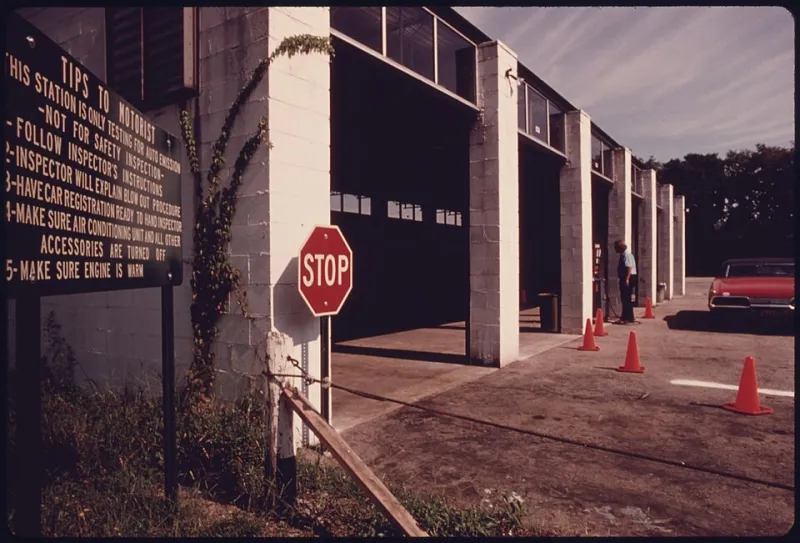
Photo: Lyntha Scott Eiler, Public domain, via Wikimedia Commons
The Comfort of a Single Word
There's a reason "certified pre-owned" became one of the most effective phrases in automotive retail. It does something remarkably efficient: it converts a used car — something people are inherently skeptical about — into something that feels almost as trustworthy as new. One word. Certified. The anxiety dissolves.
But certification isn't a federal standard. There's no government agency defining what a CPO inspection must include. Every manufacturer builds its own program, sets its own rules, and decides for itself what gets checked, what gets fixed, and what gets quietly left off the list. The word "certified" is consistent. The actual inspection behind it is not.
The Inspection Checklist Isn't What You Think It Is
Most buyers imagine a CPO inspection as something close to a comprehensive mechanical audit — every system examined, every component evaluated, every problem corrected before the car hits the lot. That image is largely a product of marketing.
What actually happens varies significantly. Some manufacturer programs use inspection checklists with over 150 points. Others use fewer than 100. Some require that every identified issue be repaired before certification. Others allow vehicles to be certified with known deficiencies as long as those deficiencies fall below a certain threshold. Some programs require inspections to be performed by certified technicians using brand-specific diagnostic tools. Others allow third-party inspections that may not have access to manufacturer-level software.
The inspection form might be long. That doesn't mean every line on it represents a thorough evaluation.
Where the Gaps Tend to Hide
A few areas show up repeatedly when you look at where CPO programs leave buyers exposed.
Structural history. Many CPO programs check for existing structural damage but don't independently verify the vehicle's full accident history beyond a standard history report. As anyone who has followed used car buying knows, a clean history report doesn't guarantee a clean history. Accidents settled privately, repairs done at independent shops, and damage that was never reported to insurance can all stay invisible — and still pass a CPO inspection.
Wear items with life remaining. Brake pads, tires, and other wear components typically need to meet a minimum threshold to pass certification. But "minimum" means exactly that. A vehicle can be certified with brake pads at 30% life and tires at the lowest acceptable tread depth. It passes. It's certified. It's also going to need new brakes and tires within the year.
Software and electronics. This one is increasingly significant in newer vehicles. Infotainment bugs, intermittent sensor errors, and software glitches often don't trigger during a standard inspection. They show up three weeks after you drive off the lot. Most CPO programs don't include comprehensive software diagnostics as a defined inspection requirement.
Battery health in hybrid and electric vehicles. Some manufacturer CPO programs have added battery state-of-health checks for hybrid and EV models. Many haven't. A battery that tests within acceptable range today might degrade significantly faster than expected — and the certification didn't tell you anything meaningful about its long-term trajectory.
Why These Gaps Exist
The honest answer is that CPO programs are profit tools as much as they are quality guarantees. Dealerships make money on CPO vehicles — through the certification fee built into the price, through extended warranty sales, and through the premium buyers willingly pay for the "certified" label.
The more rigorous the inspection requirements, the more vehicles get disqualified, and the more repairs eat into margin. Programs are designed to be thorough enough to be credible and flexible enough to be profitable. That balance isn't always drawn in the buyer's favor.
Manufacturers also have reputational incentives to maintain some quality standard — a flood of CPO vehicles with major problems would be a PR disaster. So the programs aren't fraudulent. They're just not as comprehensive as the word "certified" implies.
Questions Worth Asking Before You Sign
The good news is that buyers who know what to ask can get much more useful information than the certification label provides on its own.
Ask for the actual inspection report — not a summary, the full checklist with technician notes. Reputable dealers should be able to provide this. If they can't, that's information too.
Ask specifically about wear items: what percentage of brake pad life remains, what tread depth the tires measured at, when the battery (on hybrids) was last tested and what the result was.
Ask whether the inspection was performed by a factory-trained technician using OEM diagnostic equipment. This matters especially for European brands, where proprietary software is often required to surface fault codes that a generic scanner won't catch.
And regardless of what the certification says, budget for an independent pre-purchase inspection from a mechanic of your choosing. Most dealers will allow this. The ones who won't are telling you something.
The Takeaway
CPO certification isn't meaningless. It does represent some level of inspection and typically includes a more comprehensive warranty than a straight used car sale. But the gap between what "certified" implies and what it actually guarantees is wide enough to drive a car through — and manufacturers have little incentive to close it.
The word does its job before you ask any questions. Your job is to ask them anyway.