The Word 'Lifetime' on Your Transmission Fluid Label Means Something Very Different Than You Think
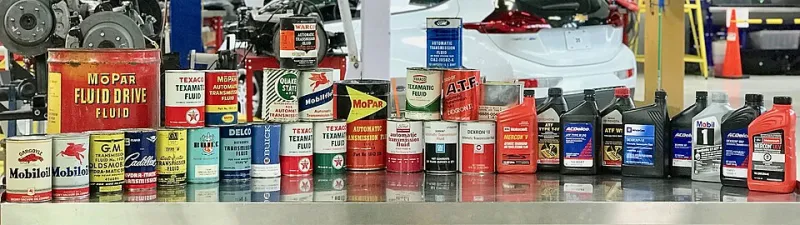
Photo: Hymn62, CC BY-SA 4.0, via Wikimedia Commons
The Word 'Lifetime' on Your Transmission Fluid Label Means Something Very Different Than You Think
At some point in the last few decades, a handful of major automakers started labeling the automatic transmission fluid in certain vehicles as a "lifetime fill." No maintenance required. No scheduled changes. Just drive and forget.
For car owners, it was a dream. One less thing to worry about. One less service to pay for.
For transmission repair shops, it's been a steady source of business.
The Promise That Sounds Better Than It Is
The marketing logic behind "lifetime" fluid is straightforward: modern synthetic transmission fluids are significantly more durable than older formulations, and in controlled conditions, they can last a very long time without breaking down. That part is true.
The problem is what "lifetime" actually means in the context of how automakers use the term — versus what most people reasonably hear when they read it.
To the average driver, "lifetime" means the life of the car. As long as you own it, as long as it runs, the fluid is fine. That's the intuitive reading, and it's the one that gets people into trouble.
The Definition Engineers Actually Use
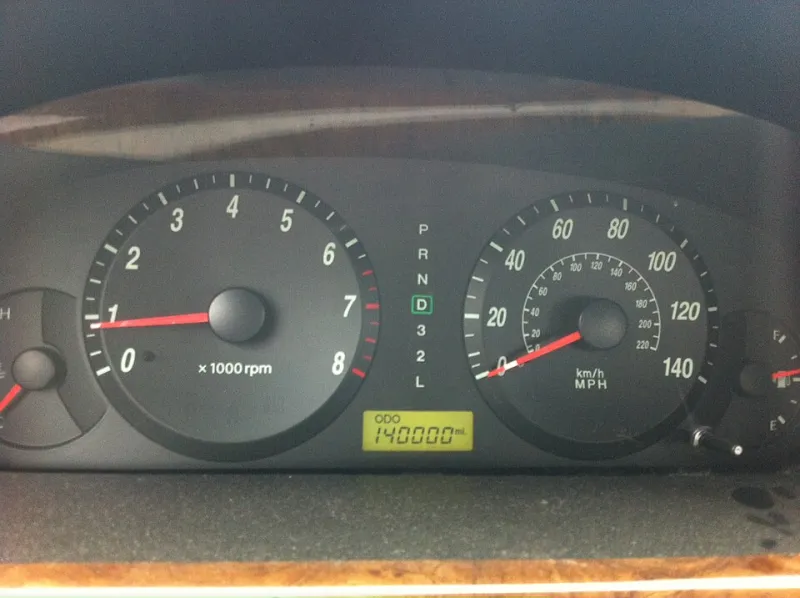
When automakers say "lifetime," the working definition is typically the expected warranty period of the vehicle — not the operational lifespan of the car itself. In many cases, that's been interpreted internally as somewhere between 100,000 and 150,000 miles, or the duration of the powertrain warranty.
Some manufacturers have been more explicit about this than others. Ford, General Motors, and several European brands have faced scrutiny over this exact terminology. In some cases, updated service documentation quietly added recommended fluid change intervals that contradicted earlier "lifetime" language — changes that didn't make headline news and that most owners never saw.
The fluid didn't change. The fine print did.
What Actually Happens to Transmission Fluid Over Time
Transmission fluid isn't just a lubricant. It's a hydraulic medium, a coolant, and a cleaning agent all in one. Inside an automatic transmission, it's under constant thermal stress — heating up during operation, cooling down when the car sits, and absorbing microscopic metal particles shed by clutch packs and gears over time.
The additives in synthetic transmission fluid — the components that make it effective — break down under this sustained stress. Viscosity changes. The fluid's ability to protect metal surfaces diminishes. Oxidation byproducts accumulate. And all of those metal particles that have been slowly collecting? They don't disappear. They circulate.
By 150,000 miles in a vehicle that's never had a fluid change, what's inside that transmission often looks nothing like the clean, reddish fluid that went in at the factory. It's darker, thinner, and carrying a load of contaminants that the filter — if the transmission even has a serviceable one — was never designed to handle indefinitely.
Why This Quietly Costs Owners Thousands
Automatic transmission repairs are among the most expensive jobs in automotive service. A rebuild can run anywhere from $2,500 to $5,000 or more depending on the vehicle. A replacement can exceed that.
The cruel irony is that many of these failures are gradual. The transmission doesn't announce that it's struggling. Shift quality softens. Hesitation appears at certain speeds. By the time there's a noticeable problem, the damage is often already done.
Owners who followed the "lifetime" guidance in good faith — because that's what the manual implied — are often blindsided. They maintained the car. They did what they were told. The terminology just didn't mean what they thought it meant.
Why the Misconception Has Stayed So Sticky
Several things keep this myth alive. First, the fluid actually does perform well for a long time, which reinforces the belief that nothing needs to be done. A car can run fine at 100,000 miles with original fluid, which feels like proof the system is working.
Second, the service interval information is buried. It's not in the quick-reference maintenance guide on the sun visor. It's in extended service documentation or updated technical bulletins that most owners never encounter.
And third, there's no dashboard light for degraded transmission fluid. Unlike oil life monitors, there's no signal telling you the fluid has passed its effective window. The car just keeps running — until it doesn't.
What Independent Mechanics Recommend Instead
Most transmission specialists and independent mechanics who don't have a financial stake in the "lifetime" narrative recommend fluid inspections every 30,000 to 60,000 miles regardless of what the label says, with changes based on condition, driving patterns, and the vehicle's actual service history.
Towing, stop-and-go city driving, and operation in extreme temperatures all accelerate fluid degradation. A vehicle used in those conditions is operating well outside the assumptions that made "lifetime" labeling seem reasonable in the first place.
A transmission fluid change, depending on the vehicle, typically runs between $100 and $250. That's a straightforward comparison against the cost of a rebuild.
The Takeaway
"Lifetime" on a fluid label isn't a guarantee — it's a term defined by the company that sold you the car, not by physics. The fluid inside your transmission has a real functional window, and that window is shaped by how you drive, not by what the sticker says. Checking in on it periodically is one of the lower-cost, higher-impact things you can do to avoid an expensive surprise down the road.