The Sunroof You Paid a Premium For Is Quietly Working Against Your Resale Price
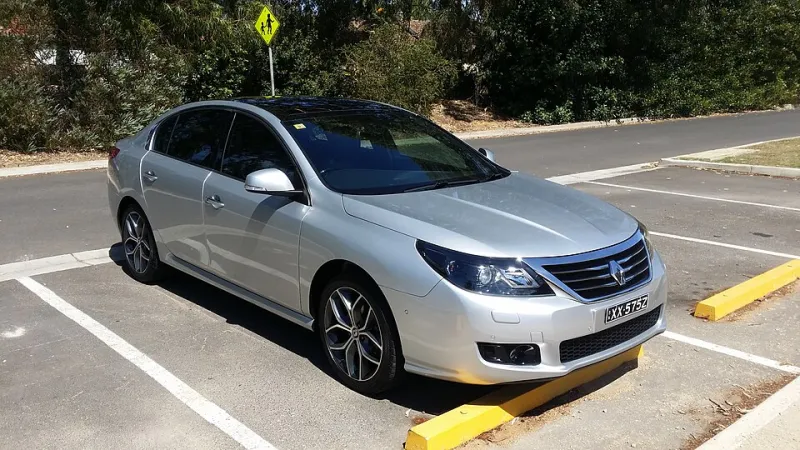
Photo: TuRbO_J from Adelaide, Australia, CC BY 2.0, via Wikimedia Commons
The Upgrade That Feels Like a Win
When you're configuring a new car or scanning a used lot, a sunroof feels like an obvious yes. It lets in light, opens up the cabin, and carries a certain upscale energy that cloth-roof alternatives just don't. Manufacturers know this, which is why sunroofs — whether traditional sliding panels, panoramic glass roofs, or fixed moonroofs — typically show up as option packages ranging from a few hundred to several thousand dollars above the base price.
The assumption baked into that decision is simple: more features equal more value. You pay more going in, and you get more coming out.
Except that's not really how sunroofs work in the used car market. And the gap between what buyers expect and what the data shows is wider than most people realize.
What the Used Car Numbers Actually Show
Used vehicle pricing isn't a perfect science, but there are consistent patterns in what buyers will and won't pay for on the secondary market. Sunroofs — especially panoramic ones — have a complicated reputation among private buyers and wholesale appraisers alike.
The issue isn't that buyers dislike sunroofs. Many actively want them. The problem is that used car buyers are also shopping for risk, and a sunroof is a known risk vector. The older the car, the more that risk factors into what someone is willing to offer.
At trade-in, dealers account for the likelihood that they'll need to address sunroof-related issues before reselling the vehicle. That cost expectation gets subtracted from their offer to you. In some cases — particularly with high-mileage vehicles, older panoramic systems, or cars from brands known for drainage issues — the presence of a sunroof can actually lower a trade-in offer compared to an otherwise identical sunroof-free model.
That's not universal, and it depends heavily on vehicle age, brand, and market. But it's a real pattern that contradicts the assumption that more features always mean more money.
Why Sunroofs Develop Problems — and Why It's Almost Inevitable
To understand why buyers and dealers are cautious, you have to understand what a sunroof actually is: a moving mechanical system set into the roof of a vehicle, surrounded by seals and drained by small tubes that run through the body of the car.
Every one of those components has a lifespan.
The seals that keep water out harden and shrink over time, especially with temperature cycling — something every car in every American climate experiences constantly. As those seals degrade, water finds its way in. Sometimes it drips into the headliner. Sometimes it soaks into the insulation above the cabin. Sometimes it finds the drain tubes, which are supposed to route water out through the body of the car — except those tubes clog. Leaves, debris, and sediment work their way in and block the drain path, which means the water has nowhere to go except into the vehicle.
Water intrusion in a car is expensive. It can damage electronics, create mold in the headliner or carpet, and cause rust in places you can't see. And none of it announces itself dramatically. It builds slowly, often invisibly, until something fails or someone notices a smell.
Panoramic roofs add a layer of complexity to all of this. They're heavier, they cover more surface area, their sealing systems are more involved, and when they fail — whether that's a cracked panel, a delaminated inner layer, or a catastrophic seal failure — the repair costs can run into the thousands. Glass replacement alone on a panoramic roof can exceed $1,500 before labor.
The Upfront Premium vs. the Long-Term Math
Let's look at this from a practical angle. Say you paid $1,800 extra for a sunroof package when you bought your car new. Over the course of ownership, you might spend money on a drain tube cleaning or two (routine maintenance that most sunroof owners don't know they need until there's a problem), a seal replacement, and possibly a motor service if the panel starts opening and closing erratically. None of those are catastrophic expenses individually, but they add up — and they're costs that a sunroof-free vehicle simply doesn't have.
At trade-in, if the dealer's appraiser sees any sign of headliner staining, moisture, or seal wear, the number they offer drops. If the sunroof mechanism is sluggish or makes noise, it drops further. The $1,800 premium you paid going in has now become a liability rather than an asset.
The math works out better in some scenarios — a low-mileage, late-model vehicle in excellent condition, for instance, where the sunroof hasn't had time to develop problems. But across the full ownership arc of a typical car, the return on that upfront investment is rarely positive.
Does Any Sunroof Pay Off?
Fair question. The short answer is: occasionally, but not reliably.
Fixed glass roofs — panels that don't open — carry less risk than sliding or venting panels because there's no motor, no track, and significantly less seal stress. Some buyers prefer them aesthetically, and they don't introduce the same drainage concerns. If you're going to have glass overhead, fixed is lower-risk.
Traditional single-panel moonroofs on well-maintained vehicles with documented service history also hold up reasonably well in the resale market, particularly on vehicles where that feature is strongly associated with the model's identity.
Panoramic roofs on high-mileage vehicles, or on cars that have spent years in climates with heavy rain or snow, are where the risk-to-reward ratio tilts most unfavorably.
The Takeaway
Sunroofs are a genuine pleasure to have on a car — nobody's arguing otherwise. But they're not the value-add they're marketed as. They introduce maintenance costs most buyers don't anticipate, they age in ways that concern used car appraisers, and they frequently fail to return their upfront premium at resale. If you love the feature and plan to keep the car long-term, enjoy it — just budget for upkeep. If you're buying with resale in mind, the sunroof line on the window sticker deserves a second look.